
Thursday Night Champions League Explained: Why UEFA Has Changed the Schedule Again
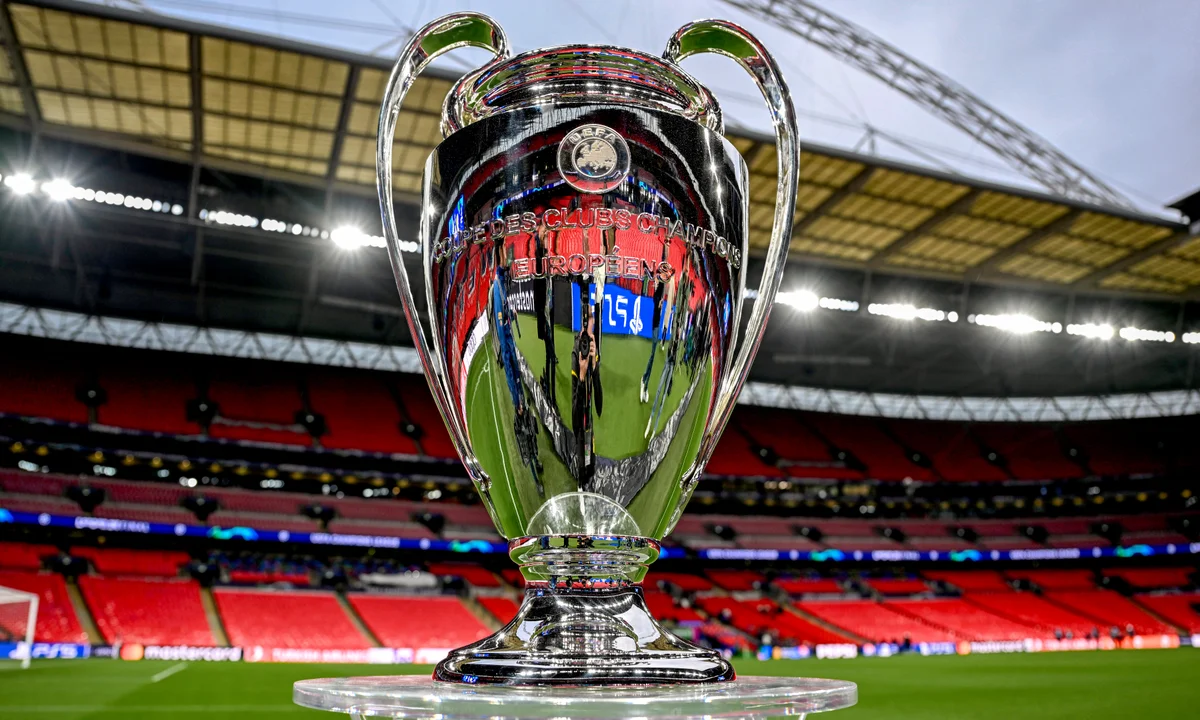
For decades, Thursday has been associated with Europa League and Conference League football, while the Champions League has occupied Tuesday and Wednesday nights.
That changes for one week at the start of the 2026/27 campaign.
The Champions League's opening matchday is being played across Tuesday, Wednesday and Thursday, with Manchester United among the clubs taking to the pitch on Thursday when they host Sabah.
But there is a very specific reason behind UEFA's unusual scheduling — and Thursday will quickly return to its familiar role.
Why is Champions League football on Thursday?
The answer lies in the Champions League's new format.
Since the 2024/25 season, the competition has expanded from 32 to 36 teams, with the old group stage replaced by a single league phase.
Every club plays eight matches against eight different opponents, with four games at home and four away.
Rather than being split into eight groups, all 36 teams compete in one table.
That creates a much bigger scheduling challenge on the opening matchday.
With 36 teams involved and multiple fixtures needing to be accommodated, UEFA uses an additional night to spread the games across three days.
Hence the unusual sight of Champions League football on Thursday.
What is the Champions League's 'exclusive week'?
There is another piece of UEFA scheduling behind the decision.
Each of UEFA's three men's club competitions is given an exclusive matchweek during the European season.
For the Champions League, that exclusive week is Matchday 1.
Because there are no Europa League or Conference League fixtures taking place during that period, UEFA can use Tuesday, Wednesday and Thursday for Champions League matches.
It effectively creates extra breathing room for a competition involving 36 clubs while also giving broadcasters more flexibility.
Once the opening matchday is finished, however, the normal routine returns.
When does Champions League football return to Tuesday and Wednesday?
From Matchday 2 onwards, Champions League fixtures return to their usual Tuesday and Wednesday slots.
Thursday nights will once again belong primarily to the Europa League and Conference League.
That means the Thursday Champions League experiment is very much a one-week occurrence rather than a permanent change.
The 2026/27 opening matchday begins on Tuesday, September 8, and runs through Thursday, September 10.
Manchester United among Thursday's Champions League teams
Manchester United are one of the clubs giving Thursday's schedule its most recognisable name.
They host Azerbaijani champions Sabah at Old Trafford at 8pm on Thursday.
Other fixtures scheduled for the opening matchday include:
Fenerbahce vs Roma — 5:45pm
PSV Eindhoven vs Shakhtar Donetsk — 5:45pm
Como vs RB Leipzig — 8pm
Bayern Munich vs Bodo/Glimt — 8pm
Manchester United vs Sabah — 8pm
Slavia Praha vs Lens — 8pm
The opening round also includes several heavyweight clashes across the three-day schedule, including Real Madrid against Inter Milan and Barcelona against Feyenoord.
What happens to the Europa League?
The Europa League gets its own exclusive week immediately afterwards.
Its opening round will run across Wednesday and Thursday, before the competition settles into its regular Thursday schedule for the rest of the league phase.
The Conference League, meanwhile, remains a Thursday competition throughout its league phase, with its final league round receiving a dedicated Thursday showcase.
So the unusual Champions League Thursday is effectively part of a carefully organised UEFA rotation.
Why did UEFA change the Champions League format?
The move from 32 to 36 clubs fundamentally altered the competition's scheduling requirements.
Under the old group-stage system, 32 teams were divided into eight groups of four.
The new league phase places all 36 clubs into one table and gives every team eight different opponents.
After those eight matchdays, the top eight automatically qualify for the round of 16.
Teams finishing ninth to 24th enter a play-off round, while those finishing from 25th to 36th are eliminated.
That structure creates more matches and a more complicated calendar, particularly during the opening round.
Using three consecutive nights for Matchday 1 is therefore UEFA's solution to a logistical problem rather than an attempt to permanently move Champions League football to Thursdays.
Thursday night Champions League will disappear again
For traditionalists, there is some reassurance.
Once the opening matchday ends, Thursday nights will once again be associated with Europa League and Conference League football.
The Champions League returns to Tuesday and Wednesday from Matchday 2, meaning the Thursday night fixtures are effectively a one-week quirk of the expanded competition.
The unusual schedule may look like a break from decades of European football tradition, but there is method behind it.
The Champions League has more clubs, more league-phase fixtures and a much more complicated format than before.
For one week, that means Thursday belongs to Europe's elite.
After that, normal service resumes.

Quincy is a seasoned sports journalist, editor, and media professional with extensive experience delivering high-impact content across leading media platforms. Renowned for a discerning editorial perspective and a strong command of the sports industry, Quincy has built a distinguished portfolio spanning sports journalism, strategic storytelling, and content development. With a commitment to journalistic excellence, accuracy, and compelling narrative, Quincy brings a sophisticated editorial app
More from this author →Related Stories
 Champions League
Champions League Yellow Card Rule Change Explained as UEFA Introduces New Suspension Threshold
 Champions League
PSG Have Already Made History — Now Luis Enrique Wants the Champions League Feat Only Three Clubs Have Managed
 Champions League
Hyundai Make Major Champions League Move as Five-Season Partnership Begins
 Champions League
Comments (0)
Be the first to comment on this story.
Leave a comment